Private Education vs. Consumer Installment Loans: 5 Gaps That Distort Servicing
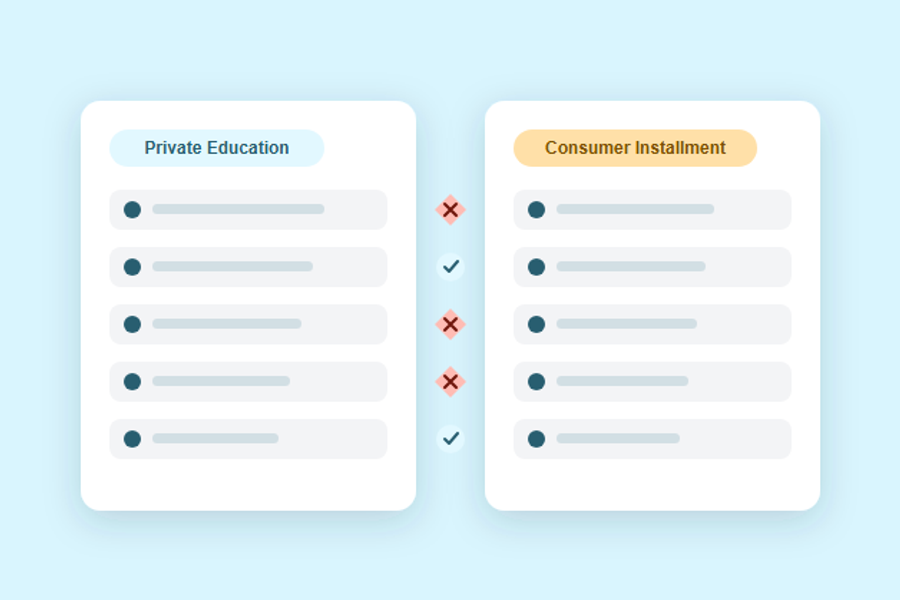
Table of Contents
Key Takeaways
- Consumer installment systems carry no in-school deferment status, so they flag enrolled borrowers as delinquent and inflate the reported default rate above actual portfolio risk.
- Interest capitalization at grace period end increases the principal balance before repayment starts; systems that skip recording this event produce an amortization schedule and payoff quote built on the wrong number.
- Private education loans disburse per academic term, but consumer installment accrual logic reads the full committed amount from origination and produces an interest trail that cannot reconcile against actual disbursements.
- When a student drops below half-time enrollment, in-school deferment ends under the loan terms, but no consumer installment platform carries a system trigger for this event.
- Private education loan co-signer release provisions require graduation-linked or payment-count triggers that consumer installment co-borrower logic does not track.
The private education loan pre-repayment lifecycle is the enrollment-contingent post-origination period spanning in-school deferment and grace period before amortized repayment begins. During this period, interest accrues on the full outstanding principal balance, with no scheduled payment collection or principal reduction. No consumer installment loan carries this phase.
The most consistent servicing error I see with private education lenders is a delinquency rate that reads materially higher than the actual default picture. Private education loans serviced through consumer installment logic produce distorted output at every stage of the pre-repayment lifecycle.
One distinction matters before the five gaps. In-school deferment is a structural lifecycle phase tied to enrollment status. Hardship deferment and forbearance are discretionary modifications applied to a borrower already in active repayment. Servicers who conflate the two lose control of their delinquency numbers before they realize it.
The CFPB's 2025 Private Education Loan Ombudsman report records a rise in private education loan servicing complaints and untimely responses. With the One Big Beautiful Bill Act eliminating Grad PLUS for new borrowers effective July 2026, private education lending volume is expanding. Lenders running consumer installment logic against these portfolios will find each of the following five gaps before their first reporting cycle closes.
Why Does Your Private Education Loan Portfolio Show More Delinquencies Than It Actually Has?
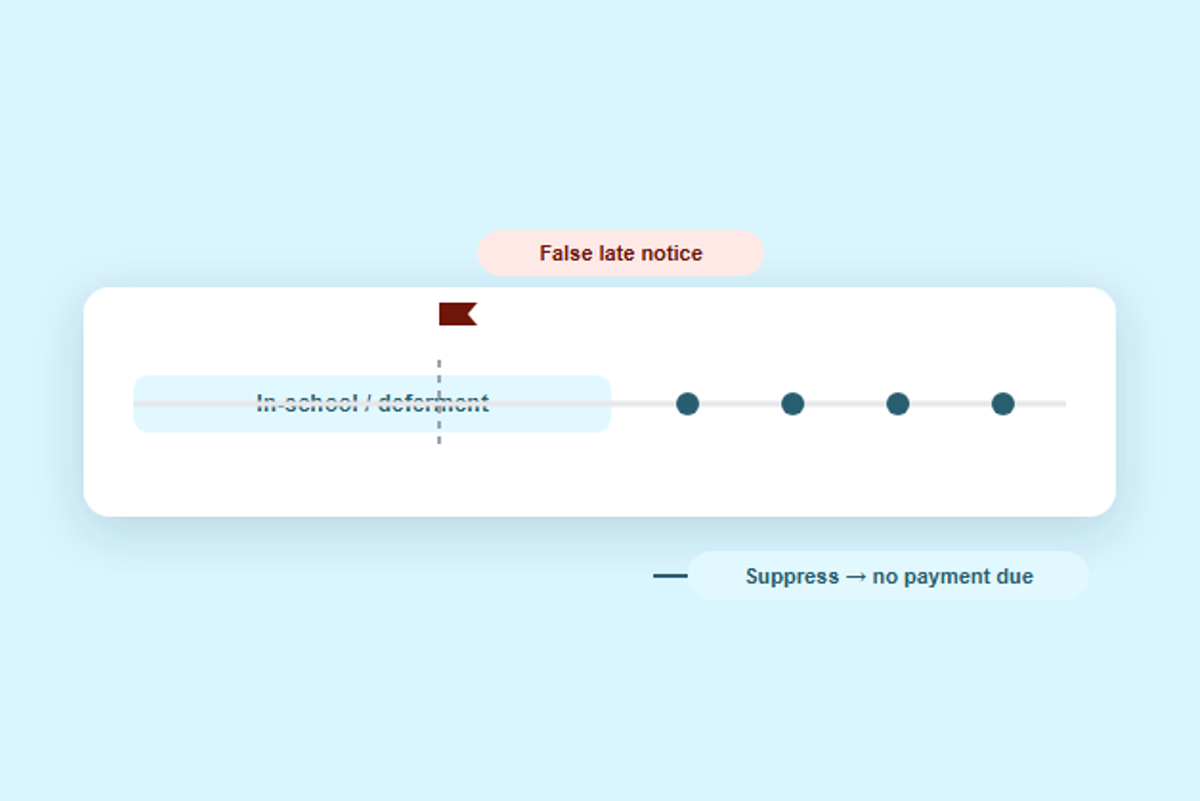
Consumer installment logic treats all loans as in repayment from the time of origination. Any private education borrower in the enrollment period who has made no payments shows as delinquent in a system that carries no enrollment status field and no pre-repayment deferment phase. For how this distorts portfolio-level reporting, see payment waterfall mistakes that corrupt delinquency reports.
Fix 1: Identify the Delinquency Source
Delinquency flags fire when a scheduled payment goes unmet. In-school borrowers owe nothing during enrollment under their loan terms. The system has no mechanism to separate contractual deferment from actual non-payment, so every enrolled borrower inflates the delinquency count.
In Bryt, the loan activity log shows payment history against the configured schedule, isolating deferment-period loans from actual defaults in a single view.
Fix 2: Suppress False Late Notices
A delinquency flag triggers a late notice. Sending that notice to a borrower current on their in-school deferment terms creates compliance exposure and damages the lender-borrower relationship in the same action.
In Bryt, the Notices module lets servicers deactivate late notice triggers on specific loan records during configured $0-payment periods, preventing system notices from reaching in-school borrowers.
Fix 3: Configure Zero-Payment Periods
The correct action is a loan setup step before the in-school phase begins, not a correction applied after the fact. The servicer sets the payment amount to $0 for the enrollment period. Interest accrues, the loan record stays current, and the borrower owes nothing until the grace period ends.
In Bryt, the Loan Modification workflow (Modify Loan > Payment/Amortization) lets servicers configure $0-payment periods for the in-school phase, accumulating outstanding interest without generating delinquency flags.
Why Does the Amortization Schedule Your Borrower Receives at Repayment Use the Wrong Principal Balance?
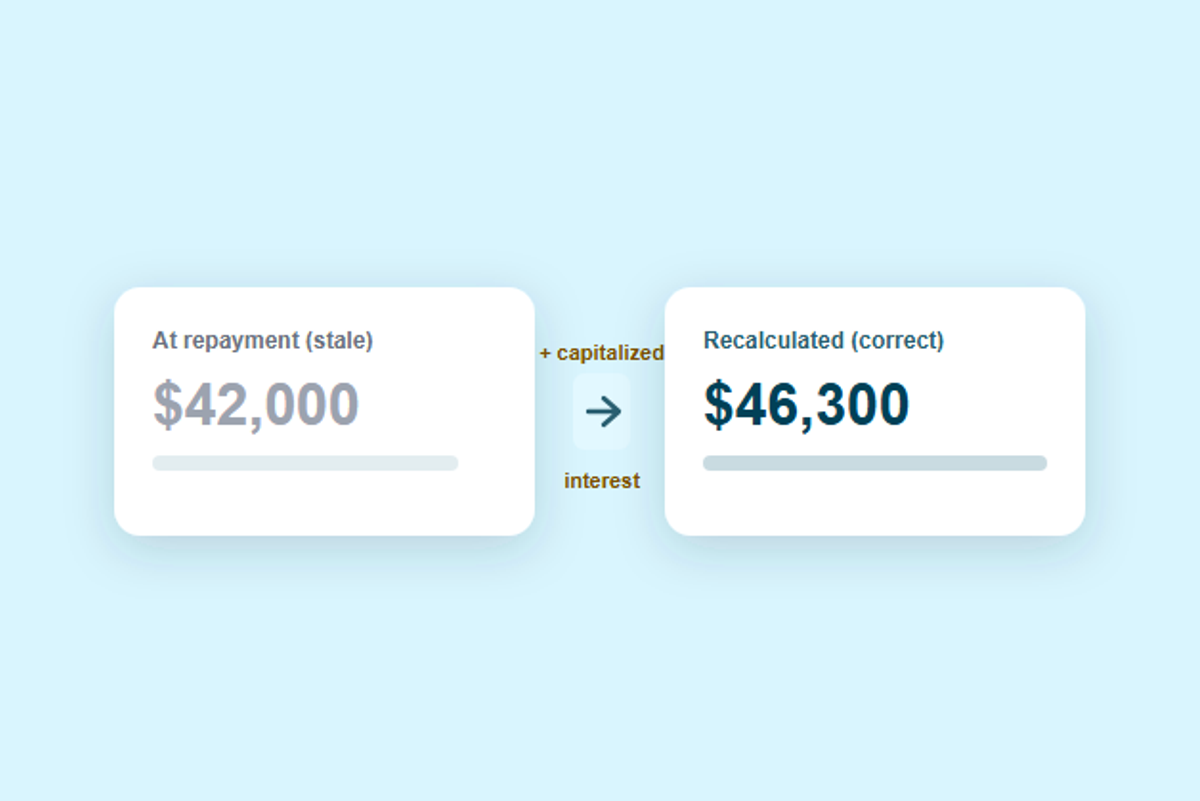
Interest capitalization is the event where all accrued interest from the in-school and grace phases folds into the outstanding principal balance before amortized repayment begins. Consumer installment systems never record this event as a principal-balance change, so the repayment period opens on the wrong number.
Fix 1: Record the Capitalization Event
Outstanding interest in a consumer installment system is a separate line item paid down over time. In private education loan servicing, capitalization converts that line item into principal. Any servicer who skips recording this conversion hands the borrower an amortization schedule built on a balance that is too low, and every payment from day one is miscalculated.
In Bryt, the Add/Modify Loan Principal workflow records capitalized interest as a principal addition and updates the loan balance before the amortization recalculation runs.
Fix 2: Recalculate Before First Payment
Once capitalization is recorded, the amortization schedule must be rebuilt from the new balance before the first payment notice goes out. This changes the monthly payment amount, the payoff date, and total interest cost. Borrowers who receive a pre-capitalization schedule dispute their statements from month one.
In Bryt, the Payment/Amortization modification (Modify Loan > Payment/Amortization) recalculates the schedule from the post-capitalization principal before repayment begins.
Fix 3: Correct the Payoff Quote
A payoff quote generated without a recorded capitalization event understates the actual amount owed. The borrower pays the quoted figure, the loan does not close, and the servicer records a partial payoff. For how payoff quote errors play out on consumer installment loans, see payoff quote mistakes with consumer loans.
In Bryt, the Payoff Calculator generates an accurate figure after the capitalization event is recorded and the principal balance reflects the post-capitalization amount.
How Do Semester-Based Disbursements Break the Interest Accrual Logic in Your Loan Management System
Private education loans release funds per academic term against a single committed loan balance. Each disbursement carries a distinct accrual start date. Consumer installment logic assumes one origination date and begins accruing on the full committed balance from day one regardless of how much has been disbursed. For draw reconciliation mechanics, see reconciling draw disbursements against budget line items.
Fix 1: Identify the Single-Origination Problem
A servicer tracking a $40,000 education loan through consumer installment logic accrues interest on the full $40,000 from origination, even if only $10,000 was released in semester one. The audit register cannot reconcile against disbursement events, and the borrower pays interest on funds they have not received.
In Bryt, the Draws module logs each disbursement as a draw event against the committed balance, linking each tranche to its draw date and creating a reconcilable audit trail.
Fix 2: Log Each Disbursement Separately
Each semester disbursement needs its own record: draw date, disbursed amount, and accrual reference point. Without these records, the servicer cannot explain the interest calculation to the borrower or an auditor.
In Bryt, each draw event in the Draws module timestamps the disbursement and establishes the draw date as the reference point for that tranche's activity log.
Fix 3: Disclose the Accrual Basis
The Draws module accrues interest on the full committed loan balance from origination, not the disbursed amount at each draw date. This differs from standard education loan disbursement practice. Servicers must document and disclose this accrual basis to borrowers at loan setup. The Draws module requires the Investments add-on module.
In Bryt, record the full-balance accrual basis in the loan file notes at setup so the borrower's first statement includes a clear explanation of the interest calculation method.
What Happens to Servicing Record When a Student Drops Below Half-Time Enrollment
When a student drops below half-time enrollment, in-school deferment ends under the promissory note terms. The loan must transition to the grace period or active repayment. No consumer installment platform carries a system trigger for this event, and the servicer receives no signal that anything has changed.
Fix 1: Recognize the Missing Trigger
Consumer installment systems carry no enrollment status field. The loan stays in its configured deferment state until the servicer manually updates it. By the time the servicer discovers the change, the loan has accrued interest outside the contractual window for months, and the borrower has received no repayment notification.
In Bryt, the Custom User Field (CUF) lets servicers create an enrollment status field on the loan record, giving the servicing team an auditable data point to review on a defined cadence.
Fix 2: Build the Audit Cadence
An enrollment status review on a fixed schedule tied to academic term breaks catches status changes before interest accrues outside the contractual window. The review runs before each semester starts and at the close of each one.
With Bryt, the CUF enrollment status field appears in the standard loan summary view, making it part of the routine loan review rather than a separate manual step.
Fix 3: Update Loan Status Promptly
When the review confirms a borrower dropped below half-time, the servicer updates the loan status, confirms the grace period start date, and sends the repayment notification within the timeframe the promissory note requires. The timeline runs from the enrollment status change date, not from when the servicer discovered it.
In Bryt, the loan record update runs through the Loan Management workflow. The servicer enters the status change date, confirms the grace period start, and triggers the repayment notice through the Notices module.
Why Do Co-Signer Release Dates Fall Through the Cracks in Consumer Installment Loan Systems?
Private education loans frequently carry a parent co-signer with release provisions in the promissory note. Release activates after qualifying consecutive on-time payments or upon graduation with income verification. Consumer installment co-borrower logic tracks neither condition.
Fix 1: Understand the Release Provision Gap
Consumer installment systems record a co-borrower as permanently associated with the loan. No payment counter runs toward a release threshold. No graduation date field exists. The co-signer remains liable indefinitely unless the servicer initiates a manual action, and most servicers have no system prompt to do so.
In Bryt, the co-borrower contact category links the parent co-signer to the loan record and maintains a separate communication history and document folder for that contact.
Fix 2: Track the Release Criteria
Private education loan release criteria typically require a qualifying payment count, a graduation confirmation, and an income threshold verification. Servicers who do not actively track all three miss the release window and carry compliance exposure for every day past it.
In Bryt, the CUF lets servicers create a release eligibility date field and a qualifying payment counter on the loan record.
Fix 3: Document the Release Action
When the qualifying conditions are met, the servicer generates the release confirmation, updates the co-borrower contact record, and retains the documentation in the loan file. A complete release record protects the lender and the former co-signer from future liability disputes.
In Bryt, the co-borrower contact record stores release documentation in the document folder tied to that contact, keeping the release history inside the loan file without a separate record.
The Bottom Line
Each gap traces to one structural fact - private education loans carry a pre-repayment lifecycle that consumer installment systems were not built to track.
Servicers who configure their systems to the actual lifecycle structure of their education loan portfolios produce accurate numbers. Those who do not spend their time explaining wrong output.
Bryt Software is a cloud-based loan management platform serving private education lenders and 12 additional lending verticals.
If your private education portfolio is returning delinquency rates, payoff figures, or disbursement registers that do not match your actual book, the servicing configuration is where to start.
See how Bryt handles pre-repayment lifecycle tracking, semester disbursement management, and co-signer documentation for private education portfolios.