Why Private Education Lenders Are Inflating Their Own Delinquency Rates
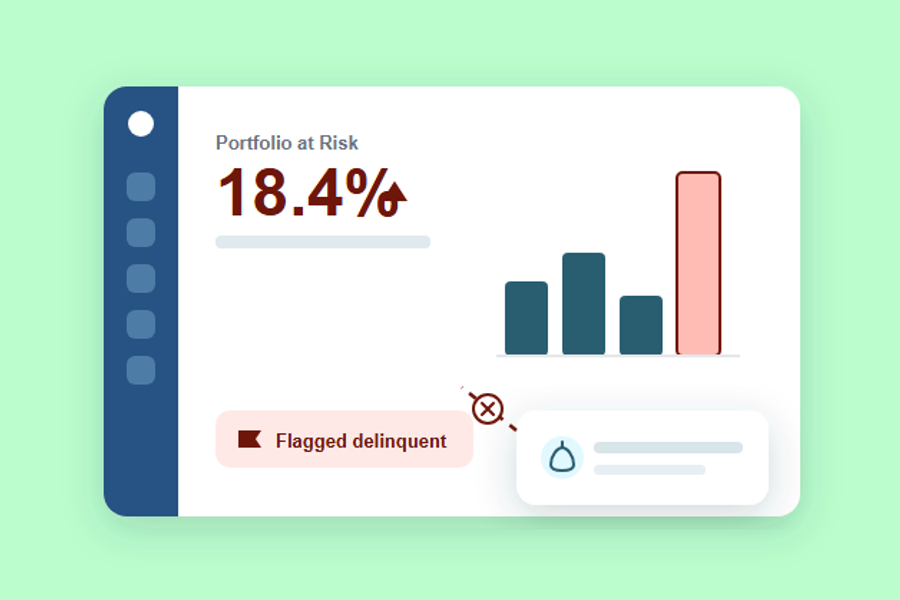
Table of Contents
Key Takeaways
- Verbal payment pauses that never reach the loan management system generate delinquency flags regardless of the arrangement agreed to on the call.
- Unrecorded forbearance pushes Portfolio at Risk (PAR) upward without a credit event to back it, sending a distorted risk signal to investors, warehouse lenders, and internal leadership.
- A portfolio with delinquency flags and no supporting modification records is a regulatory finding waiting for an examiner to name it.
- Interest accrues during an undocumented pause the same way it does during a documented one, leaving borrowers with a higher balance than the arrangement they actually agreed to.
Private education lenders run tight portfolios. They watch days past due closely, track Portfolio at Risk (PAR), and produce aging reports for investors. Then a significant portion of them hand those investors a delinquency figure that overstates their actual credit risk.
I have seen this gap across private education lending more times than I expected when I first started looking at it. The cause is consistent - a documentation failure at the servicing level that has nothing to do with the borrowers or the underwriting behind them.
A verbal forbearance documentation gap is the structural absence of a system-of-record entry for a payment accommodation both parties agreed to. A servicer takes a call, agrees to push a payment out by one period, and marks the ticket resolved. Nothing enters the loan management system. The due date passes, no payment posts, and the system records a delinquency.
That entry corrupts every metric downstream: PAR, aging report outputs, investor performance reporting, and the lender's regulatory audit posture. Every one of those effects traces back to a conversation that left no documentation.
Are Your Delinquency Numbers Tracking Credit Risk or Servicing Gaps?
A verbal agreement to pause a payment does not change what the loan management system expects. A borrower calls with a cash flow problem. The servicer agrees to push the payment by one period and keeps moving through the queue. The servicer logs nothing as a formal forbearance or loan modification.
When the aging report runs that week, the loan shows as delinquent. The gap compounds across a servicing team. Different servicers handle informal arrangements differently. Some record $0 payments. Some write a quick note. Some do nothing.
Without a standard protocol requiring documentation before the due date passes, the inconsistency becomes systematic. The way missed pay periods get recorded across different workflows shows how fast these inconsistencies build up.
Document Every Pause Formally
A capable Loan Management Software (LMS) gives servicers the tools to record a payment pause as a formal modification before the due date, preventing the system from generating a delinquency flag.
In Bryt, the Modify Loan workflow logs the pause as an extension or payment modification with a dated system entry, closing the gap at the source before the aging report runs.
What Does a Distorted PAR Metric Actually Cost a Private Education Lender
PAR calculates against every loan the system believes is in arrears. When verbal payment pauses go unrecorded, loans with no credit event behind them inflate the ratio, and that number reaches warehouse lenders, impact investors, and internal credit leadership as a performance signal.
The MeasureOne Private Student Loan Report tracks industry delinquency by explicitly excluding formal forbearances from the calculation. That methodology assumes the forbearances are documented. When a lender's verbal arrangements stay unrecorded, those loans count as delinquent in the lender's own system while comparable lenders with documented arrangements exclude them from their delinquency figure. The PAR output looks worse than the benchmark for reasons unconnected to credit quality.
The downstream costs are concrete. Collections teams dispatch against borrowers in valid arrangements, consuming staff time and damaging relationships.
Warehouse lenders reviewing performance data see a PAR figure that may trigger covenant conversations. Impact investors receiving quarterly reports draw risk conclusions from data that misrepresents the portfolio they invested in. Payment waterfall errors that corrupt delinquency reports work through the same mechanism: a process gap that the aging report cannot distinguish from a real credit event.
Run Reports on Documented Loans Only
Loan Servicing Software must separate loans with formal modification records from loans with unrecorded gaps in its delinquency output.
In Bryt, the Aging Report treats loans with recorded $0 payment modifications differently from loans with unrecorded payment gaps, giving lenders a delinquency figure that reflects actual portfolio status rather than servicing process failures.
When Does an Informal Payment Pause Become a Regulatory Liability?
Examiners do not evaluate intent. They evaluate documentation. When a portfolio shows delinquency flags with no corresponding modification record behind them, that combination is a finding.
The CFPB Education Loan Examination Procedures direct examiners to review servicing files for evidence that payment accommodations align with what servicers communicated to borrowers. An examiner reviewing a loan at 45 days past due expects a formal record: a forbearance entry, a loan deferment record, a modification, or at minimum a dated note with user attribution. When none of those exist, the absence is the problem.
The risk does not stay contained to individual loans. A pattern of undocumented verbal arrangements signals a systemic compliance gap. Examiners cross-referencing CFPB complaint filings with portfolio data will find it: borrowers reporting collections contact during agreed payment pauses, and no system record to validate or refute either account.
Staff turnover accelerates the exposure. The servicer who made the verbal arrangement may have left. The loan record holds nothing. At examination, the documentation cannot be reconstructed from memory, and the verbal agreement is not a defence.
Build a Dated Audit Record
Your LMS must capture payment accommodations at the loan level with a timestamp and user attribution that survives staff turnover.
In Bryt, the loan-level User Notes section creates a date-stamped, user-attributed entry for any arrangement, giving examiners a documented trail that aligns with the delinquency status in the system.
Why Do Borrowers Dispute Their Balance When Repayment Resumes?
Accrued interest does not pause because the payment did. Whether the pause is documented or not, interest accumulates through the payment gap at the contractual rate. When repayment resumes and the balance is higher than the borrower expected, the servicer holds no record of what the arrangement actually included.
The borrower's expectation came from a call. The servicer agreed to skip one payment. The borrower assumed a clean restart at the same balance. When the account shows a higher balance at resumption, the dispute follows.
The servicer's position is difficult. The system calculated correctly under the loan terms. The borrower has a reasonable expectation from a conversation with no record behind it. Without a modification entry capturing the pause period, the agreed resumption date, and the interest treatment, there is no shared reference point. The servicer defends a balance the borrower never agreed to, or absorbs the cost of an accommodation that was never formally structured.
Settle the Balance Before Resumption
A capable LMS lets servicers log a payment pause as a formal extension with documented terms before interest accrues against an undisclosed arrangement.
In Bryt, the Loan Modification tools record the pause as an extension period, giving both parties a clear balance figure and a documented starting point before repayment resumes.
The Bottom Line
The delinquency rate a private education lender reports is only as accurate as the documentation behind each loan in the aging report.
Hence, the fix is to follow a documentation discipline that applies at the moment of the call, before the due date passes and the system records what the servicer fails to prevent.
Bryt gives private education lenders the modification and documentation tools to keep reported delinquency aligned with actual portfolio behaviour.
See how Bryt handles payment pauses, formal loan modifications, and aging report accuracy inside a single workflow.